
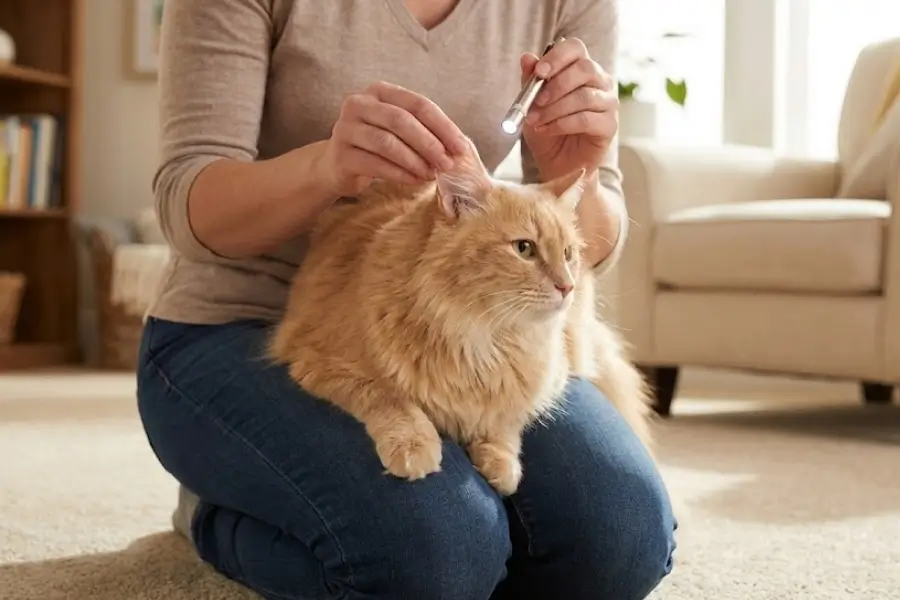
Cats are masters at hiding pain and illness, a survival instinct that means obvious signs of sickness often appear when a condition is already advanced. As a cat owner, you are the first line of defense for their health. Performing simple, routine health checks at home can help you detect potential problems early.
1. Coat and Skin Check
A healthy cat should have a smooth, glossy coat and clear, pliable skin.
– How to check: Run your hands over their entire body, feeling for any lumps, bumps, scabs, or rough patches. Part the fur to look for signs of parasites like fleas or ticks.
– What to look for: Excessive grooming, hair loss, redness, flakiness, or any new lumps or bumps.
2. Eyes and Ears Check
Eyes should be bright and clear, and ears should be clean and odorless.
– How to check: Look into their eyes for clarity. Gently fold back the ear flap to inspect the canal.
– What to look for: In the eyes, look for redness, cloudiness, tearing, or discharge. In the ears, check for a buildup of dark, waxy debris, redness, or a foul odor, which could indicate infection or mites.
3. Teeth and Gums Check
Dental disease is a very common problem that affects overall health.
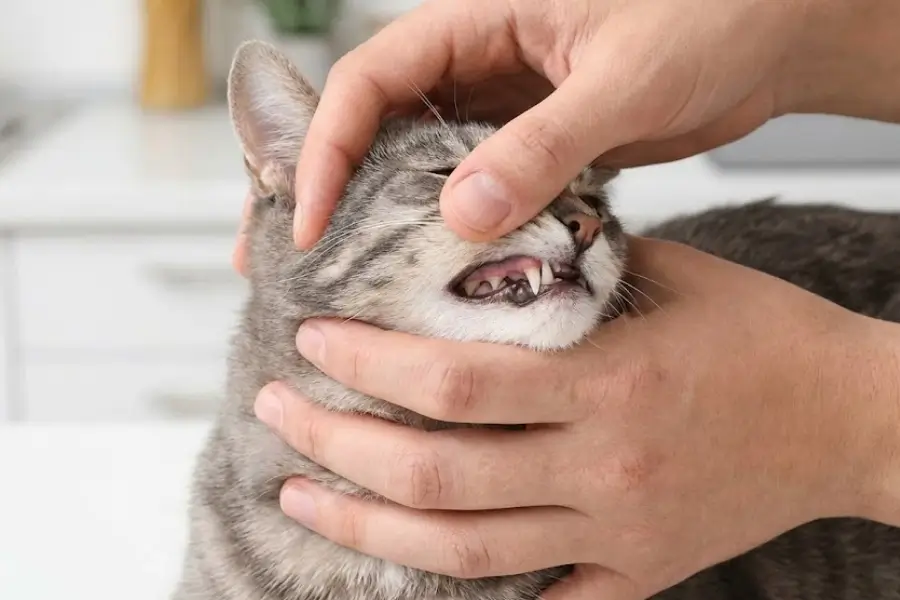
– How to check: Gently lift your cat’s lips to examine their teeth and gums.
– What to look for: Gums should be pink, not red or swollen. Look for a buildup of yellow or brown tartar, loose teeth, bleeding gums, or severe bad breath.
4. Weight and Body Condition Check
Maintaining a healthy weight prevents many diseases like diabetes and arthritis.
– How to check: Feel for your cat’s ribs. You should be able to feel them with a light touch, but they shouldn’t be sticking out. Look for a visible waistline when viewing them from above.
– What to look for: If you can’t easily feel the ribs, your cat may be overweight. Sudden, unexplained weight loss or gain is always a reason for concern.
5. Litter Box Habits Check
Changes in litter box habits are often one of the first signs of a medical problem.
– How to check: Pay attention to the frequency, volume, and consistency of their urine and feces.
– What to look for: Straining to urinate, urinating more or less frequently, blood in the urine, or eliminating outside the box can signal a urinary tract issue. Diarrhea or constipation indicates digestive problems.
Conclusion
Performing these simple health checks regularly will help you become more attuned to your cat’s normal state of health. Remember, these checks are not a substitute for professional veterinary care. If you notice anything unusual, contact your veterinarian immediately to ensure your feline friend has a long, happy, and healthy life.













0 Comments