
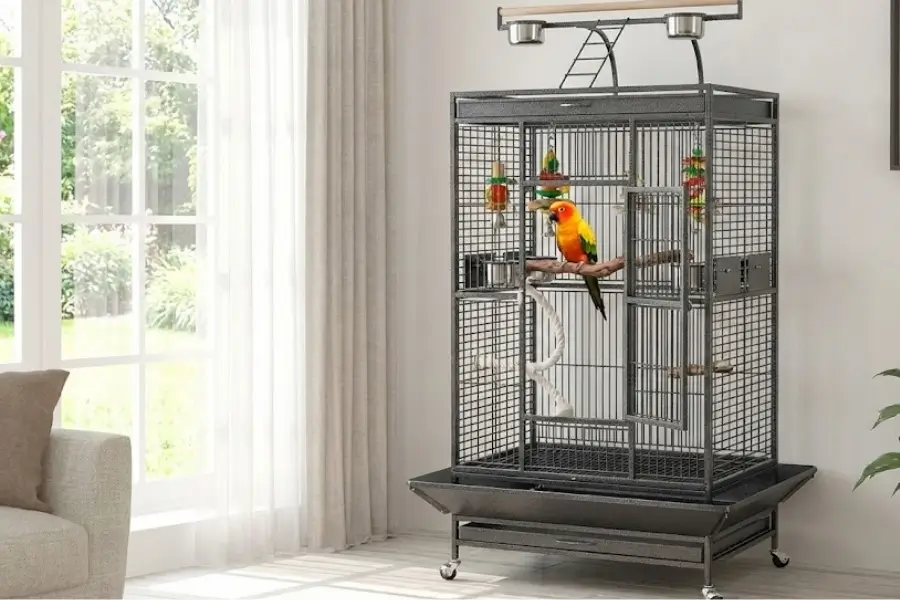
A bird’s cage is their home, their sanctuary, and their playground. The right setup is crucial for your feathered friend’s physical health and mental well-being, preventing boredom and behavioral issues. Providing a safe, comfortable, and stimulating environment is the foundation of responsible bird ownership.
1. Size and Dimensions: Bigger Is Always Better
The most critical rule is to provide a cage large enough for your bird to fully extend their wings and fly from perch to perch.
– Horizontal Space: For most species, width (horizontal space) is more important than height, as birds fly horizontally.
– Bar Spacing: The space between the bars must be appropriate for your bird’s size. If the spacing is too wide, they can get their head stuck; if too narrow, they might get their toes caught.
2. Material and Construction: Safety First
Birds chew on their cage bars, so the material must be non-toxic.
– Safe Materials: Powder-coated wrought iron and stainless steel are the best, they are durable, non-toxic, and easy to clean.
– Materials to Avoid: Never use cages made of lead or zinc, as these heavy metals are highly toxic to birds. Avoid cages with rust or chipping paint.
– Security: Invest in secure, escape-proof latches, as birds are clever escape artists.
3. Location, Location, Location
Where you place the cage affects your bird’s sense of security and well-being.
– Central Location: Place the cage in a central area of your home where the family spends time, as birds are social and want to be part of the “flock.”
– Avoid Kitchens: Never place a cage in or near the kitchen. Fumes from overheated non-stick cookware (Teflon/PTFE) are instantly fatal to birds.
– Safety: Avoid direct sunlight (can cause overheating) and drafts from windows or air conditioning vents.
4. The Interior Setup: Creating a Stimulating Environment
A bare cage is a boring cage. You need variety to prevent boredom.
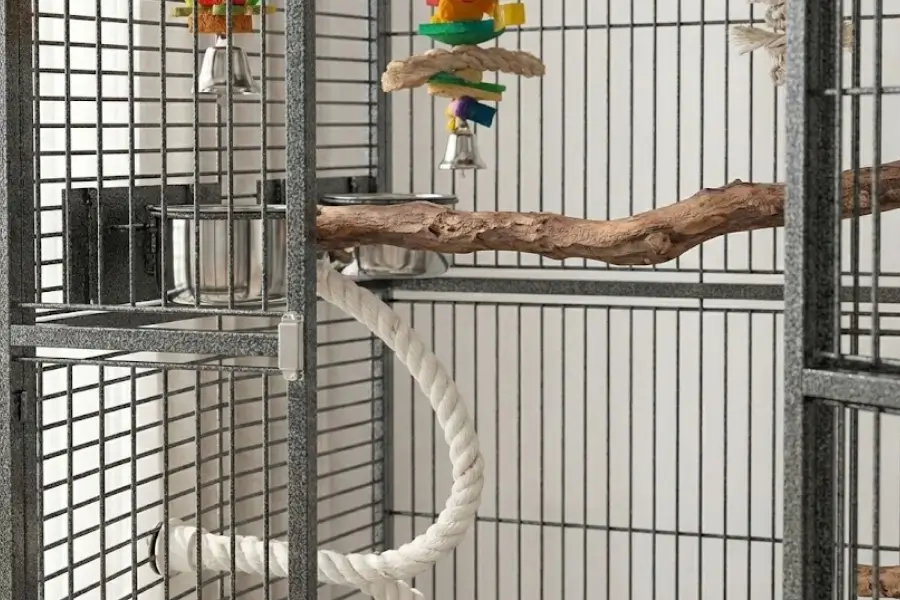
– Perches: Provide perches of **varying diameters and textures**. Natural wood branches (manzanita, java wood) are the best as they exercise the feet and prevent pressure sores. Avoid using only smooth, uniform dowel perches.
– Toys: Offer a variety of stimulating toys, including foraging toys, shredding toys (paper, wood), and puzzle toys. **Rotate the toys weekly** to keep your bird engaged.
– Bowls: Use stainless steel or ceramic food and water bowls, as they are hygienic and easy to clean. Place them where they won’t be soiled by droppings.
5. Maintenance and Cleaning
A clean cage is a healthy cage.
– Daily Routine: Change the cage liner daily and clean food/water bowls with hot, soapy water.
– Weekly Deep Clean: Perform a thorough cleaning, scrubbing the tray and grate, and disinfecting the entire cage with a bird-safe cleaner.
Conclusion
Choosing a large, safe cage and setting it up with variety and enrichment is the foundation of providing a long, healthy, and happy life for your feathered companion.












0 Comments